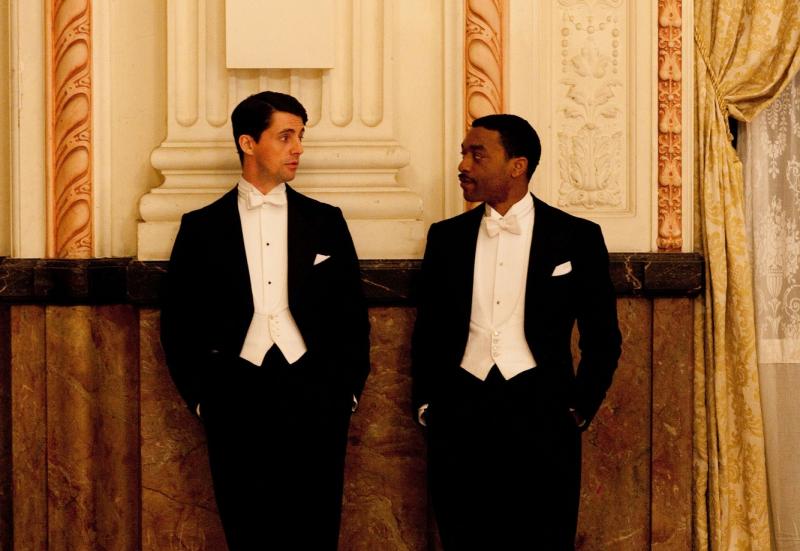
As flights to the United States began again this morning, the news reached me, via a roundup email from Jazz North West, that one of midtown Manhattan's most historic hotels, the Pennsylvania on Seventh Avenue, which closed at the start of the Covid pandemic last year, is to remain shut and will eventually be demolished. The Pennsylvania, opposite Penn Station and close to Madison Square Garden, was not only a venue for live jazz in the forties, but also saw its phone number become a swing standard.
On my first trip to the United States in 2002 - a baseball tour by coach along the East Coast from Baltimore to Boston, with stops in Philadelphia, New York City and the Hall of Fame at Cooperstown in upstate New York - we stayed at another of midtown Manhattan's iconic hotels, the Edison on 47th Street, whose ballroom also hosted live music in the big band era, and drank in the bar where Luca Brasi met his end in The Godfather.
Having listened to the post-war recordings of blues pianist Cousin Joe Pleasant on which he plays clarinet alongside Sidney Bechet on soprano saxophone, I was prompted to pick up Really the Blues, the autobiography of Mezz Mezzrow, who was known in the jazz world as much for being a raconteur and sometime drug dealer as he was for his playing.
Born Milton Mesirow in 1899, into a middle-class Jewish family of "doctors, lawyers, dentists and pharmacists" on Chicago's Northwest Side, he was soon running with a street gang which congregated at the corner of Western Avenue and Division and as a teenager spent time in juvenile detention for car theft (the book's memorable opening lines are: "Music school? Are you kidding? I learned to play the sax in Pontiac Reformatory."). He also found his way to the South Side Chicago jazz clubs, including the De Luxe Café at 35th and State where he first met Bechet.
In 1928, Mezzrow moved to New York, living on the Grand Concourse in the Bronx, just across the Harlem River from the African-American section of uptown Manhattan whose clubs he began playing in, and where he became friends with Louis Armstrong.
In 1941, he was sentenced to 1-3 years for possession with intent to supply marijuana and sent to Rikers Island, where, in an echo of the Rachel Dolezal case, he managed to "pass" as black and be allocated to the block for African-American prisoners which housed friends and fellow musicians from Harlem. Released at the end of 1942, he resumed playing on the New York jazz scene before leaving for France in the early fifties, where he died in 1972 and was buried in Père Lachaise Cemetery in Paris.
The book includes an appendix that discusses the technical differences between New Orleans and Chicago-style jazz, an afterword that describes the "transculturation" by which Mezzrow came to see himself as "a pure Black", a self-identification which would surely, and rightly, not go unchallenged now, and a glossary of "hip" slang, including "mezz" for marijuana, as in this song by Stuff Smith.
I was reading the other day about Manchester Sports Guild, which led me to a live album recorded there in 1966 that I hadn't heard of before, Jivin' With Jack by the New Orleans blues pianist Champion Jack Dupree.
Although, as its name suggests, Manchester Sports Guild was primarily an amateur sports club, many of its members were only nominally there for athletic activities, as throughout the sixties the cellar of its social club on Long Millgate near the Cathedral hosted some stellar jazz artists.
Champion Jack, who picked up his nickname as a professional boxer in the thirties, was also an accomplished cook, a skill which saw him become a US Navy chef in World War II. He left New York in the early sixties and travelled to Europe, moving between Scandinavia, Switzerland and England, where he lived in Ovenden, a village on the edge of Halifax, before ending up in Germany, where he died in 1992.
His 1966 set spans humorous material (The Sheikh of Araby, Income Tax) and more traditional blues standards (How Long Blues, Going Down Slow), interspersed with some well practised banter with the audience.
The album's liner notes mention that "Manchester Sports Guild at the time was home to Manchester Jazz Society. Each Wednesday the society held meetings in the clubroom at which guests would give talks or recitals." Since then, the society - which I've been a member of for the last dozen years or so - has met weekly at various pubs around the city centre, most recently at the Unicorn and Britons Protection.
Manchester Sports Guild's social club closed in the early seventies - along with numerous other jazz venues whose late night licences, and supposed licentiousness, offended the morals of Manchester police chief, and sometime Methodist lay preacher, James Anderton - and was demolished a few years after that, with the site now occupied by the National Football Museum. I will think of Champion Jack the next time I pop in there.
Impulse Records has just issued Blue World, an album of material from a rediscovered and until now unreleased John Coltrane session in 1964, for the score of an experimental Canadian film about a young couple in Montreal, Le Chat Dans Le Sac.
The session opens with the laid-back and lyrical Naima, first heard on his debut album for Atlantic Records in 1959, Giant Steps, with the rhythm section of the Miles Davis Quintet which he would leave the next year - pianist Wynton Kelly, bassist Paul Chambers and drummer Jimmy Cobb - replaced by that of his own "Classic Quartet", pianist McCoy Tuner, bassist Jimmy Garrison and drummer Elvin Jones.
Most of the tracks are shorter and blusier than the ballad which both the session and the film begins with, in contrast to the longer and freer compositions on his next Impulse album, the religiously inspired A Love Supreme.
With Thelonious Monk's score for the 1959 French film Les Liasions Dangereuses being rediscovered a few years ago, it makes you wonder what other jazz gems are yet to be unearthed in the archives.
Like the Unicorn where the Jazz Society met until a few weeks ago, I first went to the Briton's Protection for political and union meetings, some of them fringe events of conferences being held across the road at the former Manchester Central railway station, now an exhibition space and convention centre. The Peterloo massacre, the bicentenary of which falls later this month, took place in the area between the two and features on the pub's sign and a painting inside.
One of Manchester's oldest pubs, the Briton's Protection, with its long front lounge, L-shaped corridor and two rear rooms supplied by a serving hatch at the back of the bar, is known for its interior tiling and the number of malt whiskies it sells (it's also home to Manchester Whisky Club). A Grade II listed building, it's included on CAMRA's national inventory of historic pubs.
From being a former Tetleys house with an average beer offer of a couple of cask bitters from regional brewers (Jennings and Robinsons), it's now expanded its draught range to include the products of local microbreweries and other styles, including mild and stout, and well deserves its award for the former, which it now turns over a cask of every couple of days.
The programmes on Talking Pictures TV, broadcast on Freeview channel 81, are fast becoming some of my favourite on television.
As well as documentaries, like John Betjeman's elegaic early sixties train trip from Kings Lynn to Hunstanton, on a now closed north Norfolk branch line, and films such as the social realist late forties film noir "The Blue Lamp", with its superbly-shot finale at the White City dog track in west London, there are lots of repeats of sixties and seventies drama series.
My current favourite is the detective series "Public Eye", made for ITV between 1965 and 1975. I hadn't heard of it before and am not sure why, unlike many other, in some cases inferior, shows from the era, it hasn't been repeated on a more mainstream channel.
Although the central character, private detective Frank Marker, might seem like a bit of a TV cliche, a loner, slightly dishevelled and with a somewhat murky past, the writing and acting really lift it (as with my favourite TV detective, Columbo, it's now impossible to imagine anyone else playing the role apart from Alfred Burke, despite neither he nor Peter Falk being first choices for the part), and span the comedy of the Christmas special "Horse and Carriage" to the pathos of "The Man Who Said Sorry", a terse, almost hour-long, two-hander, apart from the dialogue-free opening scene and the final one, where Marker chats to his sometime ally, sometime adversary, DI Firbank, at their usual public bar meeting place.
The location of the series moves around southern England, but for the latest, and final run, Frank Marker has setttled in Eton, renting a spartan shopfront office where he seems to subsist on instant coffee brewed on a single gas ring and takeaway meals from the adjacent Chinese restaurant. There are lots of late sixties and early seventies details, from keg fonts in the pubs to his fee of six guineas plus expenses (later decimalised as £6.50, a slight increase, no doubt the result of rising inflation, although given his seemingly sparse workload it appears doubtful that the operation would have really been commercially viable, especially in one of England's posher towns where he also rents a flat).
Perhaps the coolest feature of the series though is the jazzy theme tune, composed by Robert Earley.
One of Manchester city centre's more traditional pubs, the Unicorn Hotel on Church Street, is closing this weekend for a refurbishment.
There have been some concerns that the pub's owners - Enterprise Inns, the pubco formed out of the the ex-Bass tied estate in the early 90s - were going to remove distinctive features such as the island bar and wooden panelling and turn it into a sports bar, as they did with this historic building in Cardiff last year, but thanks to the efforts of the soon to be former landlady, Historic England and CAMRA's Heritage Pubs committee an application to grant it Grade II Listed Building status was fastracked by Manchester City Council, a welcome outcome given the new high-rise apartment buildings that have risen around it in the last few years which also seemed to threaten its future.
The Unicorn was built in 1924, originally, as its name suggests, as a hotel offering food and accommodation to local businessmen and commercial travellers (there's a fascinating history of the pub in the report written by Historic England's surveyor).
I've been drinking in the Unicorn for the last twenty years or so, mostly while attending meetings in the upstairs function room, at first union and political ones, and in the last decade those of Manchester Jazz Society, which until last week had met there every Thursday evening since the mid 90s (and before that in other pubs and clubs around town since at least the early 60s), but has now had to relocate, to an even more historic city centre pub, the Britons Protection.
Apart from its architectural features and atmosphere (which Tandleman captured well here), the other attraction of the Unicorn is that it's the last pub in Manchester city centre with Draught Bass as a permanent cask beer (as befits a former headquarters of the Honourable Order of BassDrinkers, and which you can see still with its Bass signage here). Let's hope that, as well retaining the interior, the new licensees keep it on the bar too.
Unicorn pump-handle and Bass ashtray, kindly given to me by the current landlady
Enjoying a couple of pints of Draught Bass at the Unicorn with Mike Cleaver in March
I've been listening to trumpeter Lee Morgan quite a bit this past week after attending an evening at Manchester Jazz Society dedicated to his life and music.
As well as the joyful excitement of his playing and technical mastery of his instrument, Morgan was a key figure in hard bop, the movement which from the mid-fifties brought a harder, more blues and gospel-based, sound to jazz, first as a member of Art Blakey's Jazz Messengers and then as a solo artist. The 1959 Jazz Messengers album Meet You at the Jazz Corner of the World, recorded live at Birdland in New York, on which he plays as part of Blakey's quintet, is also one of the first jazz albums I bought.
Morgan played on three seminal hard bop tracks, all of them title tracks to albums on the Blue Note label, as a sideman on John Coltrane's 1957 Blue Train and Art Blakey's 1958 Moanin' and under his own name on The Sidewinder, a 1963 soul-jazz recording which, when edited down from the ten minute-plus album version, unexpectedly became a hit single for him.
A couple of years ago, the ex-Chancellor of the Exchequer Ken Clarke (with whom I share a love of real ale, football, cricket and jazz, if not the same political beliefs) presented a Radio 4 programme about Morgan in which he told the story of his death at the age of 33, after being shot on a snowy night in 1972 at a club in Manhattan's East Village by his girlfriend and manager Helen Moore, bleeding to death before an ambulance could reach it due to the weather, but until last week I didn't know that he had given her the gun with which she killed him after she was mugged of the takings from a gig. The Swedish film director Kasper Collin also released a documentary about him last year, I Called Him Morgan, which is being screened in Manchester this week.
It's not often that you get to buy a new album by Thelonious Monk, the jazz pioneer who pretty much invented bebop piano at Minton's Playhouse in uptown Manhattan in the early 40's, but this week I did with a double CD of the recordings he made for the soundtrack of a 1960 French film, Les Liasions Dangereuses.
Although based on the 1782 novel of the same name, the film is set amongst a bourgeois family in contemporary France. Some of the music from it, including material by Art Blakey's Jazz Messengers, was released as an album at the time, but Monk's contributions lay in the record company vaults until they were rediscovered in 2014.
The sound on the album is as sharp and as fresh as the day it was put onto tape in a studio on the West Side of Manahattan in the summer of 1959. Although Monk is playing music he'd played many times before, rather than newly-composed material, there's less of the angularity and atonality which you normally associate with his playing, and which first drew me to it twenty or so years ago, more swing and lyricism, a romantic feeling even, no doubt appropriate to the theme of the film (some of the alternate and unedited takes which make up the second disc of the album are in a noticeably faster tempo than the ones which ended up being used in the film). Monk also shares frontline duties almost equally with the rest of his quintet, especially the tenor saxophonists Charlie Rouse and Barney Wilen.
The album includes a booklet with black and white and colour photos from the session featuring Monk himself in a fetching hat, his wife Nellie and patron Pannonica Rothschild, as well as extensive liner notes. My favourite are from the English, indeed Mancunian, jazz pianist and critic Brian Priestley who recalls seeing the film while living in Paris as a student in the early 60's, and even hearing a couple of Monk's musical contributions to it which were released as singles in France on jukeboxes in bars and cafes there.
Ahead of a meeting of Manchester Jazz Society in a fortnight on Larkin About Jazz:The Poet As Critic, I've just picked up a secondhand copy of Philip Larkin's All What Jazz, a collection of the record reviews he wrote for the Daily Telegraph between 1961 and 1971.
As well as being regarded as a major post-war English poet, Philip Larkin's posthumous reputation is at best that of a professional grump and commitment-phobic womaniser, and at worst that of an espouser of far-right views and composer of racist and other dubious ditties in his private letters to school and university friends such as his fellow writer and jazz fan Kingsley Amis.
Like Amis, Larkin's jazz tastes were for the New Orleans and swing bands of his youth, Armstrong, Bechet, Ellington and Basie, and he expresses his aversion to modern jazz, especially its leading proponents Charlie Parker ("compulsively fast and showy...His tone, though much better than that of his successors, was thin and sometimes shrill"), Thelonious Monk ("his faux-naif elephant-dance piano style, with its gawky intervals and absence of swing, was made doubly tedious by his limited repertoire"), Miles Davis ("Davis had several manners: the dead muzzled slow stuff, the sour yelping fast stuff and the sonorous theatrical arranged stuff, and I disliked them all") and John Coltrane ("metallic and passionless...exercises in gigantic absurdity...long-winded and portentous demonstrations of religiosity"), in the introduction to this collection, although he does moderate his opinions of them to some extent in later reviews, even going so far as to half-heartedly praise the free jazz musician Ornette Coleman ("a slow ballad that sounds as if it is trying to be beautiful").
Larkin's love of the blues is unsurprising, but what did come as a bit of a shock is that as well as interwar figures like Bessie Smith, Big Maceo and Big Bill Broonzy his tastes also extended to the postwar Chicago electric blues bands of Muddy Waters, Little Walter, James Cotton, Howlin' Wolf and Big Walter Horton with their amplified guitars and harmonicas, the rediscovered Mississippi bluesman Fred McDowell and his protege R.L. Burnside, Texas acoustic guitarist Lightnin' Hopkins, swamp blues duo Lightnin' Slim and Lazy Lester, the late sixties soul-blues of Nina Simone and even black Cajun R&B/zydeco accordionist Clifton Chenier.
For the last few days I've been listening to BBC Radio 4's Book of the Week, an abridgement of Alan Light's biography of singer and pianist Nina Simone, What Happened, Miss Simone?
Nina Simone is notable not just for spanning multiple genres in her musical output - blues, jazz, gospel, soul, R&B and pop as well as the classical music she had been trained to perform as a child in North Carolina - but also for being a political figures whose songs Mississippi Goddam and The Backlash Blues (the latter penned by her friend the Harlem Renaissance poet Langston Hughes) exemplified the harder-edged, more militant tone the black civil rights movement took on in the sixties in the face of racist intransigence from the Southern states and the Federal government's sluggishness in enforcing freedoms legally won by African-American activists.
Simone acquired a reputation for being "difficult", a trait often ascribed to her having some sort of personality disorder, but given the racism she experienced throughout her life (she refused to play at her first public piano recital until her parents were moved forwards from the back of the concert hall where they had been placed and put onto the front row and later had a place at a music college denied to her on the grounds of her colour before becoming a cabaret act at the bar in Atlantic City, New Jersey, where she adopted her stage name) it was surely either a case of her standing up for herself, or, if it did indeed stem from mental illness, was a reaction to those injustices.
Club 43, the place to hear modern jazz in Manchester from the early fifties to the late sixties, is returning to its original home, the newly-reopened Stage and Radio Club at 43 Port Street, a thoroughfare between Piccadilly and the Northern Quarter best known now as the location of Port Street Beer House.
Club 43 was owned and operated by jazz promoter Eric Scriven, first at Port Street, then from the mid-fifties in a building on Oxford Road later demolished to make way for the Mancunian Way, and finally, with business partner Ernie Garside, on Amber Street off Shudehill. Pairing British jazz musicians including drummer Phil Seamen and local bebop pianist Joe Palin with such stellar American names as Hank Mobley, Sonny Rollins and Max Roach while the latter were on tour in Europe, its closure was the result of a crackdown on late-night music clubs in the late sixties and early seventies by one James Anderton, later a hugely conroversial Chief Constable of Manchester.
Most of what I know about Club 43 are things I've learnt from fellow members of Manchester Jazz Society who patronised it, played or worked there, including Bill Birch whose book Keeper of the Flame: Modern Jazz in Manchester features photographs, programmes and maps of it.
The relaunched Club 43 kicks off at the end of this month with a session featuring Matt Nickson, of Matt & Phreds jazz club on Tib Street, whom I filmed performing with Mancunian blues legend Victor Brox last year at the Smithfield Market Tavern on Swan Street.
The singer Prince, who has died aged 57 at his home in Minnesota, drew on a number of musical genres as sources of inspiration.
The son of a jazz musician, I'd guess he was influenced by that, as well as by funk and rock (his stage act always reminded me a bit of Jimi Hendrix's). As a teenager in the mid-80's, his songs were everywhere and appealed to me more than those of his contemporary and fellow African-American singer Michael Jackson who I always found overly produced and commercial.
It's interesting how American popular music gets categorised, firstly by skin colour, with black performers tending to be called rhythm and blues artists when they'd be classed as rock or pop if they were white, and also African-American music itself, which is somewhat arbitrarily divided, generally by white critics, into secular (blues, jazz, soul, R&B) and religious music (spirituals, gospel), despite numerous artists spanning those sub-sets, including Ray Charles, Nina Simone, Etta James, Sister Rosetta Tharp and Aretha Franklin. There are also many examples of people from one genre influencing another, with clear similarities (and claims of plagiarism) between soul singer James Brown and blues harpist Junior Wells, and fusions such as soul-blues and jazz-rock.
One of the funniest things I've ever read are the liner notes to Muddy Waters' Folk Singer album in which the producer Ralph Bass muses as to whether Perry Como is a soul singer!
I watched the film Amy the other day, about the singer Amy Winehouse who died in 2011 aged 27 from heart failure as a result of alcohol and drug abuse.
Not many people come out of the film well, from her father whose desertion when she was a child seems to have triggered her later emotional problems to her husband who got her hooked on heroin and crack and the paparazzi and tabloid journalists who hounded her until her death. The only people who emerge with any credit are her first manger Nicky Shymansky and her schoolfriends who tried to help her and the singer Tony Bennett with whom she duetted not long before she died.
I can remember the first time I heard Amy Winehouse, on a pub jukebox singing Rehab. I was convinced it was a sixties soul record before the person I was with put me right.
Much of it was familiar stuff - Roy Lichtenstein's cartoons, Andy Warhol's Campbell's soup cans and Marilyn Monroe screenprints - but there were also quite a few artists I hadn't heard of before. As you'd expect in a programme largely about New York in the fifties and sixties, there was a lot of jazz on the soundtrack, especially by Miles Davis.
One thing that hadn't really struck me before was how British pop art preceded that of America, starting in the early rather than late fifties. Peter Blake, who appeared on the programme, even claims to have invented the term "pop art".
I'm reading two books at the moment which both speak to the immigrant experience in twentieth century America, albeit in different ways, The Life of Saul Bellow by Zachary Leader and The Last Sultan, Robert Greenfield's biography of Ahmet Ertegun, a founder in the late forties of Atlantic Records, the soul and R&B label whose roster of artists included Big Joe Turner, Ruth Brown, Ray Charles and Aretha Franklin.
Bellow was the son of Jewish immigrants from the Russian Empire who had travelled from St. Petersburg to Chicago via Canada whereas Ertegun arrived in Washington, D.C. with his jazz-loving brother Neshui in 1935 from London where their father had been the Turkish ambassador (The Last Sultan also discusses the Erteguns' relationship with the Chess brothers Leonard and Phil, founders of the Chicago blues record label of the same name and themselves Jewish immigrants from a town in Poland, now Belarus).
There a couple of things which immigrants bring to their artistic endeavours, whether literary or musical. One is the ability to see the society they have joined with the perspective of an outsider, and the other is a blindness to its barriers and rules: I'd guess, for example, that Ertegun was the only student at the exclusive private prep school he attended as a teenager in Maryland who bought records and went to jazz clubs in Washington's black section.
I watched the first part of the BBC drama Dancing on the Edge last night, about an American jazz band in London in 1933.
Dancing on the Edge, written by Stephen Poliakoff, is loosely based on the Prince of Wales, later Edward VIII, and his brother George going to see the Duke Ellington Band when they came to England in the early 30's. I enjoyed Dancing on the Edge and am looking forward to the second part tonight. I also enjoyed ticking off the themes that run through all Poliakoff's screenplays including hotels, trains, picnics and photography.
I wonder if Edward, by then Duke of Windsor, mentioned his enthusiasm for jazz to Hitler when he met him in 1937.
Today would have been the ninety-second birthday of the jazz pianist Dave Brubeck who died yesterday morning in Conneticut.
I know people who say they don't like jazz but who listen to Brubeck, mainly because of the ridiculously catchy Take Five, written by altoist Paul Desmond and featuring Joe Morello on drums, from Time Out, the 1959 release that became the first jazz album to sell a million copies.
Along with Kind of Blue by Miles Davis, Time Out is still the jazz album most likely to be in a non-jazz fan's CD collection, leading some jazz fans to see Brubeck's music as too commercial. I think that misses the point. I've gone in a circle with it myself: I listened to Time Out before I was into jazz and then having got into it returned to it with an extra appreciation.
Brubeck's record of standing up to racism in the 1950's when many clubs refused to book an integrated band should also not be forgotten.
Radio 1 Xtra had a programme last night about the musician, poet and activist Gil Scott-Heron who died last year at the age of sixty-two.
Scott-Heron's music spans blues, jazz, soul and funk. His spoken word poetry over a drum beat can also be seen as a precursor of hip-hop. He is probably best known for The Revolution Will Not Be Televised.
One of the most interesting bits in the programme was an interview where Scott-Heron talked about his childhood in Tennessee. He was brought up by his maternal grandmother, a religious woman who took him to church where he heard gospel music. He also listened to blues records by Robert Johnson, later describing himself as a "bluesologist" exploring the African roots of the music. I was struck by the similarities between his childhood influences and that of another African-American musician, Muddy Waters.
The programme was called Gone Too Soon but Gil hasn't gone: The Revolution Will Not Be Televised was played in Tahrir Square by the revolutionaries who toppled the Mubarak regime in Egypt last year.
Today is the eighty-seventh birthday of the jazz promoter George Wein.
Wein, who set up the Newport Jazz Festival in 1954 and the Newport Folk Festival in 1959, is largely responsible for some of the most seminal musical performances of the sixties, including Muddy Waters performing to a white audience in the U.S. for the first time in 1960 and Dylan going electric in 1965. The 1958 Jazz Festival was filmed as Jazz on a Summer's Day with Dave Brubeck, Ray Charles and Miles Davis.
On top of all that, Wein can also cut it as a pianist.