Showing posts with label beer. Show all posts

Friday, 7 August 2026

Spinning mildly in Manchester

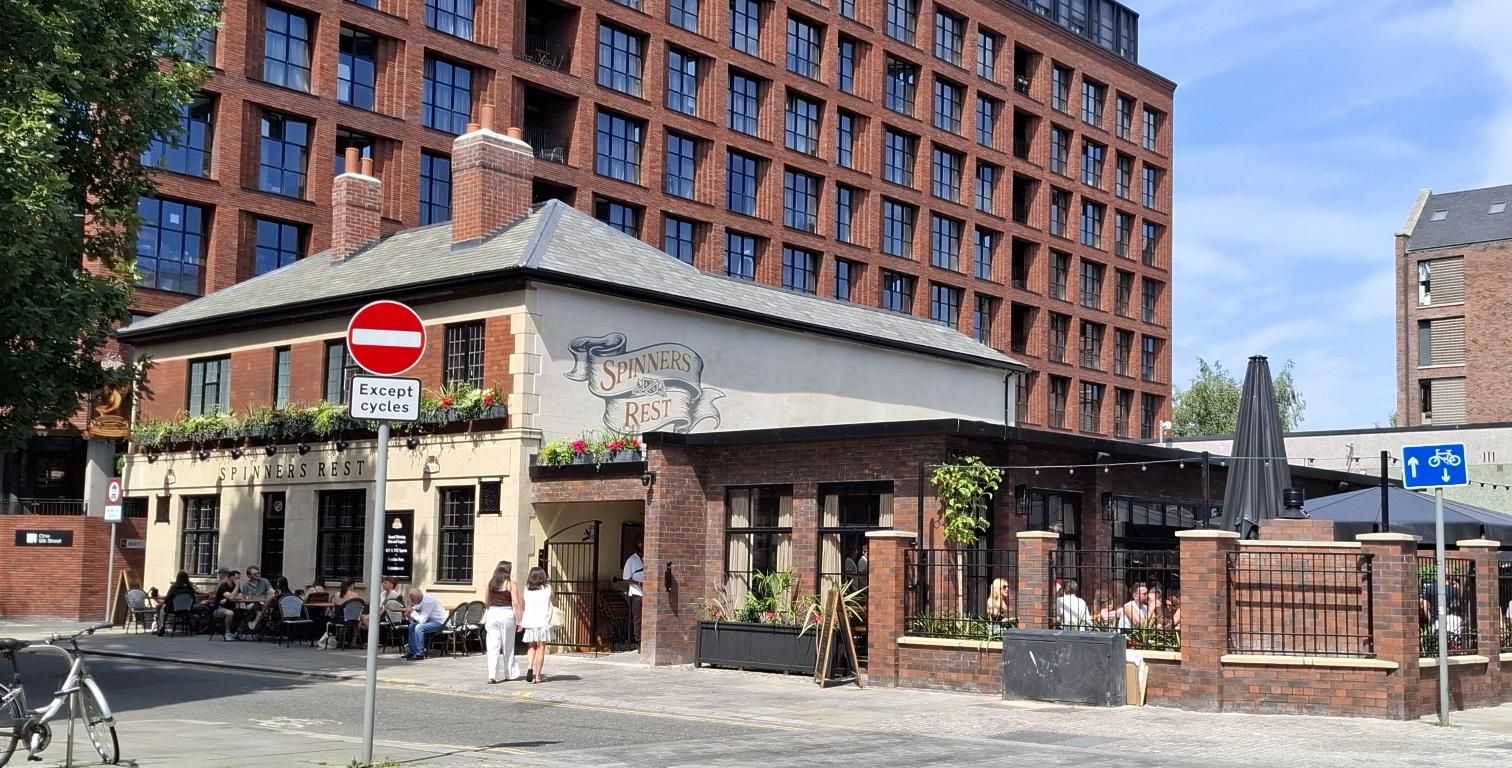
I went to the Spinners Rest in Ancoats for the first time last night as Joseph Holt's Brewery chose it as the pub where their award for the best mild of this year's Mild Magic trail organised by my local CAMRA branch, Stockport and South Manchester, would be presented.

An early nineteenth century inn which later became a keg only Irish pub called the Shamrock, and was once allegedly frequented by members of the Quality Street Gang, Holt's bought it in 2019 and reopened it this summer after an extensive refurbishment, with a new name connected to the streets of former textile mills in the Ancoats area just north of Manchester city centre. 

It's pretty much what you'd expect from a Holt's refurbishment, with lots of dark wooden panelling, Victorian style lamps and leaded glass, and they've clearly spent a lot of money on the place, something reflected in the slightly higher than normal prices which you often find in their improved pubs compared to the more basic community locals they're known for throughout Manchester and Salford.

There were four cask beers on the bar, bitter, mild, Two Hoots golden ale and a seasonal IPA. I tried the first two and found both of them to be in good form.

There's also a small beer garden at the side of the pub, where last night lots of young people were sitting outside in, as they were at trestle tables in the now pedestrianised apart from a bike lane Stevenson Square which I walked through en route to Ancoats from Piccadilly station, giving the city centre something of a continental air.


Wednesday, 1 July 2026

RIP Humphrey Smith

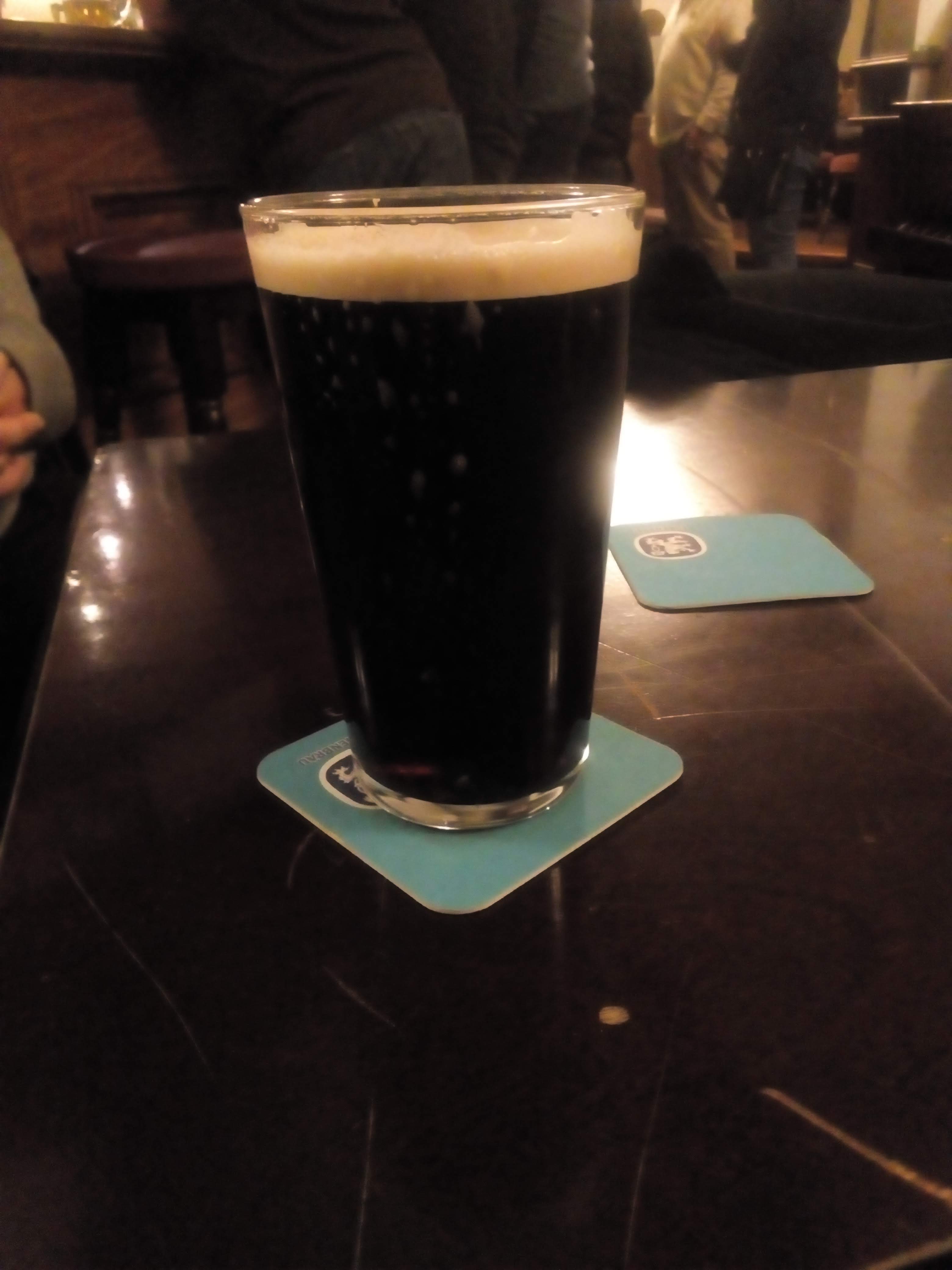
I raised a glass of Samuel Smith's Nut Brown Ale last night to the memory of Humphrey Smith, the owner of the brewery in Tadcaster, North Yorkshire, who has died at the age of 81.

He was a complex and controversial figure, as alluded to in this obituary of him.

I like the brewery's beers, in cask, bottle and keg, and their pubs (the ones that are still open that is). I'm not sure I would have liked the man himself though had I ever met him, and  I certainly didn't like the way he treated his pub managers.

Let's hope that those who inherit his empire run it in a less feudal manner, and without some of his idiosyncratic rules, while retaining the traditional feel of the pubs and quality and reasonable prices of the beers.


Thursday, 2 April 2026

An Alt Alternative

Two of the beer bloggers I read regularly, Ron Pattinson and Martin Taylor, have both been to the Rhineland recently and I've been enjoying their reports from some of my favourite Düsseldorf and Cologne pubs.

That led me to this piece which fellow beer bloggers Boak and Bailey wrote about Altbier, the beer served in Düsseldorf brewpubs, back in 2008, the year before I first went there, in which they concluded: "To recreate the Alt effect at home: Get a nice brown bitter that you like, chill it for a couple of hours, and pour it carelessly into a 250ml tumbler so that it eventually settles down to half beer, half head. We tried it — it works. A good alt is very like a cold, super bitter English ale. In our humble opinion, this better recreates the alt experience than buying a tired bottle of boring Diebels from your local specialist beer emporium."

I bought a few bottles of Sam Smith's Nut Brown Ale the other day so tried it with one of them, and it definitely worked: I almost felt like I was drinking a glass of beer in a Düsseldorf brewpub, albeit one at the maltier end of the Altbier spectrum (think Schumacher or Schlüssel rather than Uerige or Füchschen).


Altbier is usually, and rightly, compared to a British style pale ale, being hoppy, copper coloured and top fermented, but in Düsseldorf they often describe it to English speaking visitors as a dark beer (which is it compared to Pils, the standard beer in northern Germany). The maltier and darker examples also line up in taste and colour with a brown ale.


Thursday, 1 January 2026

Beers of the Year

Happy New Year everyone, hope it's a good one for you all.

Just been doing some number crunching of my 2025 beer scores on the CAMRA website. I went to 54 pubs last year, 26 in Stockport and 28 in Manchester, and submitted 99 beer scores.

Ninety of them were 3s (Good), with only a single 1 (Poor) and six 2s (Average). I gave two beers a 4 (Very Good/Excellent), Vocation Bread and Butter Pale Ale at Ladybarn Social Club and Thornbridge Jaipur IPA at the Angel on Stockport Marketplace, so hats off to them.

Cheers, and hope to see some of you at the bar this year.


Draught Bass at the reopened Crown Inn, Stockport, in August

Saturday, 20 September 2025

Best of the Fest

Oktoberfest starts in Munich today with the tapping of the first barrel of beer by the city's mayor. Breweries, specialist beer shops, online retailers and supermarkets here have all been promoting Bavarian-style lagers in the run-up to it so I picked up some from RedWillow in Macclesfield.

Festbier Märzen (5.6%)

Named after the month of March when it was originally brewed, malty, medium strong Märzen is the beer traditionally served at Oktoberfest, with Festbier being the pale version of it.

Sweetish, with an almost amber, fuller colour than I expected. Quite a bitter aftertaste.

Kellerbier (4.3%)

Kellerbier ("cellar beer") is an unfiltered lager, normally served on draught and particularly associated with Franconia in northern Bavaria. It is probably the nearest German equivalent to cask beer, especially when dispensed by gravity from wooden barrels.

Large, tight head. Very clean malt taste, balanced by a dry hoppiness. Golden colour, slightly cloudy with low carbonation.

I enjoyed both these beers and would drink them again. I'm also hoping to return one day to the beer gardens of Munich, which I lasted visited with a, sadly now late, mate back in 2010.


Saturday, 16 August 2025

Crown Inn glory

The Crown in Stockport reopened yesterday after a lengthy, and much needed, refurbishment by its new owners, the father and son who also run the Petersgate Tap between the station and marketplace, so I popped down last night to have a look.

Fifteen or so years ago, the Crown was Stockport's premier pub for cask beer, a multi handpump Victorian boozer beneath the town's famous railway viaduct which, despite not being the closest to the ground, often attracted away fans when their teams played at Edgeley Park (I was in there once on a Saturday dinnertime when a coachload of Southampton fans, whose side were briefly in the third tier, turned up having heard about its reputation for well kept real ale). But then the longtime landlord retired and the place began to drift a bit, a slow side into general shabbiness and average beer that in the last few years has seen a dizzying succession of short term licensees and sudden, unexplained closures.

Thankfully the pub is now in good hands again, with a smartened up look and cask range that I'm sure will get it back into the Good Beer Guide. It also now has Draught Bass as a permanent beer on the bar, which was flying out last night (they were already on their third cask of it!).


Monday, 11 August 2025

Roll Out the Barrel

I watched the Mets-Brewers baseball game on the BBC Red Button last night.

In the seventh inning stretch, when the crowd normally sings Take Me Out to the Ball Game, the Brewers fans sang Roll Out the Barrel. The lyrics ("Roll out the barrel, we'll have a barrel of fun") are of course perfect for the Milwaukee Brewers, and for drinking beer at the ballpark. 

They also went into the history of the song, which everyone seems to claim to have composed. I always assumed it was an English pub song (the British Film Institute once put out a DVD of short films about English pubs with that title), but it turns out to be based on a Czech polka instrumental from 1927. Czech lyrics were added in 1934, English ones by American songwriters for a hit in 1939, and then it was sung by soldiers in World War II.

Every day's a school day...


Friday, 20 June 2025

Beer and blues in the new Berlin

I went to Stockport beer festival last night, held for the third year in a row at the town's Masonic Guildhall (vale Edgeley Park: Stockport County's successes on the pitch, rising from National League North to EFL League One, and the subsequent redevelopment of the ground and its hospitality and conference facilities, have put it beyond the pocket of the organisers).

Stockport might not quite be the new Berlin, as an international DJ once dubbed it, but with a new bus station, which will now eventually become a tram interchange, a bridge across the Mersey from it to the Runaway microbrewery, which relocated there from Manchester, and some long shut pubs in that area reopening, the town is definitely on the up.

I tend to gravitate towards darker, stronger beers at festivals now, and amongst those I enjoyed last night were a strong dark mild brewed by Thornbridge, on the Burton Union system they acquired from Marston's, in collaboration with Brooklyn Brewery's Garrett Oliver, Krakow Prince, a porter from Poland's only cask beer brewery, and a smoked Redwillow Rauchbier.

On the way back to the station I popped into the Spinning Top, where a blues band was playing covers of some Chicago standards (Howlin' Wolf's Killing Floor, Jimmy Reed's Bright Lights, Big City). The Spinning Top, a music pub housed in a former Indian restaurant, is named after a short story by Franz Kafka, a quote from which is painted on the wall (Kafka spent some time in Berlin, but I don't think he ever made it to Stockport).


Tuesday, 6 May 2025

Mild about Manchester

I went into Manchester city centre yesterday afternoon and completed my sticker card for Mild Magic, an annual event organised by Stockport and South Manchester CAMRA to promote mild ale.

I usually get off to a decent start by going on the pub crawl held to launch it, but this year my attempt to join it was, er, derailed by a freight train which caught fire and shut the Manchester Airport line for several hours.

In the end, I managed to get to sixteen pubs, about half of them tied houses of local breweries Holt's and Hydes (who sponsor the event) and the others a mixture of micropubs and Wetherspoons. Seven were in the city centre, five in the SK8 postcode area, and four in south Manchester (along the Metrolink line of that name from East Didsbury to Withington).

The beer quality was generally good, with just one poor and another returned as undrinkable. I voted for the Bank Top Dark Mild I had at the Wobbly Stamp in Cheadle as the best mild, and the City Arms in Manchester as the best pub.


Friday, 7 February 2025

Supping in the seventies

I've just finished reading Keg, an overview of British brewing in the seventies by Ron Pattinson.

I was born at the start of the decade so only have fragmentary memories of the mid to late seventies, but certain things continued into and up to the end of the eighties, when I began drinking in pubs.

The consolidation of British brewing in the sixties into the Big Six national groups (Allied, Bass, Courage, Scottish & Newcastle, Watneys and Whitbread) with their large tied estates only began to break up after the introduction of the Beer Orders in 1989 - the first pub I drank in as a teenager was a Whitbread house, originally built by Manchester brewery Chester's and acquired by them when they bought Threlfalls in 1967, which finally shut last summer. The lack of choice and imposition of overpriced keg and bland national cask brands by them was a major factor in the formation of the Campaign for Real Ale in 1971 and the Big Six became their primary target throughout the seventies and eighties, although the fight against them ultimately backfired as they all subsequently sold up to global brewers with even less interest in cask beer or transformed themselves into non-brewing hotel, leisure and pub companies.

The seventies also saw lager's rise to dominance in the draught beer market, with the section on it here a snapshot of the longer, and fascinating, version in another of Ron's books, Lager.

Things which Ron mentions that I recall from the late eighties and early nineties, and which have either now disappeared or become far less common, include outside toilets, afternoon closing, drink driving, bottle-conditoned Guinness, milk stout, bottled beer mixed with draught, and not having a problem being served under the legal drinking age of 18 (the first place I drank draught beer as a 16 year old was a Labour club, after joining the Young Socialists in the 1987 General Election campaign, and which somewhat ironically is now a children's nursery. Around the same time, a couple of mates and myself sipped halves of Boddies bitter at dinnertime in a rather rough Salford estate pub, on a break from a Sixth Form thing across the road at the university, in our school uniforms). 

Smoking was of course ubiquitous and unremarked upon in pubs - the idea that it would become illegal within a couple of decades would have seemed incredible to most drinkers had it crossed our minds (I had an old coat that I only wore to my very smoky local and which stank of tobacco until I hung it out to air the next day). Other things in pubs that seemed immovable back then included men selling seafood on a Friday night and the football newspaper (pink in Manchester) on a Saturday evening, football pools coupon collectors and darts boards. You still occasionally saw older women having bottles and jugs filled with draught beer to take home. I'm not sure what the reaction to that request would be now, or to heavy drinking during working hours (Friday afternoons at Stockport social security office, where I worked in my late twenties and early thirties, were never the most productive after our extended dinnertime session at the Robbies pub round the corner).

I also recall as a kid in the seventies seeing lots of home brewing kits for sale in high street shops, the popularity of which was no doubt linked to the rising cost of draught beer in pubs, illustrated in the book by a handy table showing the average price of a pint of bitter increasing from 10p at the start of the decade to 34p at the end of it (Holt's cask bitter cost 79p a pint when I first drank it in 1989, and is now between £3 and £4.50 depending on the area the pub is in and how much the brewery has spent refurbishing it).


Friday, 6 December 2024

Winter Warmer Wanderings

I completed Winter Warmer Wander, Stockport and South Manchester CAMRA's annual celebration of strong ales, stouts and festive beers, somewhat ahead of schedule this year, three weeks before the end of the event, which runs from mid November to late December, consists of collecting stickers from pubs to win prizes, and is sponsored by Stockport family brewery Robinson's, who are also celebrating the 125th anniversary of their strong ale Old Tom.

I went to twelve pubs (four in Manchester, four in Cheadle Hulme, two in Cheadle and two in Stockport), about half of them tied houses of local family breweries (Holt's, Lees, Robinson's) and the rest a mixture of micropubs and free houses selling beers from further afield, mostly those of North Midlands breweries Thornbridge and Titanic. 

I drank more stouts than strong ales, almost all in halves due to their strength and price, although the latter were amongst my favourite beers on this year's event. I managed to call at some regular haunts, the Chiverton Tap next to Cheadle Hulme station and the City Arms in Manchester city centre, but also revisited a few pubs I probably wouldn't have gone to otherwise, including the surprisingly pubby Red Lion in Cheadle and the Pointing Dog in Cheadle Hulme, a far flung spot on the southern border of Stockport for most participants on the event, but fortunately only a couple of miles walk for me.


Monday, 4 November 2024

A couple of beers from yesteryear

I picked up a couple of beers from the supermarket the other day which were a common sight in pubs when I was younger, Newcastle Brown Ale and Mackeson's Stout, both of which have now become something of a "ghost brand": still produced, albeit in much lower volumes than before, but never advertised or promoted.

I occasionally drank Newcastle Brown Ale as a student in the early nineties, when it became something of a cult beer and was regularly stocked by student union bars (it also pops up in most episodes of Whatever Happened to the Likely Lads?, rereuns of which I've been watching on That's TV). Since then, Heineken has bought Scottish & Newcastle, demolished the former Federation Brewery in Gateshead where the beer had ended up, and moved production to John Smith's in North Yorkshire. I'm not sure if it's the move from Tyneside to Tadcaster, but it seems much smoother and blander now, although still with a decent head and a slightly sulphurous aftertaste that is quite appealing and reminded me of the famous "Burton snatch" you get in the pale ales brewed there, Draught Bass and Marston's Pedigree.

The first pub in drank in as a teenager, a Whitbread house that finally closed its doors this summer, stocked bottles of Mackeson's Stout., a beer they had acquired from a brewery in Kent which they bought, and eventually shut down, turning it into a national brand (the dairy churn on the label of the bottle indicated that it contained lactose, a sugar derived from milk). Milk stout is traditionally associated with either pregnant women and nursing mothers, due to its supposed health properties, or older ladies, no doubt because of its low strength and sweetness. The gossipy trio who supped it in the snug of the Rovers Return in early episodes of Coronation Street fit the latter archetype, although it was also the favourite drink of one of my fellow teenage pubgoers, rather the bitter, lager, Guinness and cider everyone else ordered, and who regularly took bottles of it home with her. I quite enjoyed my first taste of it, which comes now out of a can rather than a bottle: a dark brown, rubyish colour similar to Guinness, a thick, off white head, an aroma of brown sugar, bit of a thin mouthfeel, and slightly roasty, not at all sweet really (I'm still on the look out for some Whitbread Gold Label barley wine so, like Ron Pattinson at Shut Up About Barclay Perkins, I can make a Mackeson's and Gold Label black and tan).


Sunday, 29 September 2024

Castle Kings of the Mild Frontier

I went to the Castle in Macclesfield yesterday afternoon, which had been voted best pub of Mild Magic, the annual sticker trail organised by my local CAMRA branch, Stockport and South Manchester, and extended to the former Cheshire silk town for the first time this year. The owner of the Black Country brewery Sarah Hughes was also there to pick up the best mild award for their 6% beer Dark Ruby.

I haven't been to the Castle for a decade, since when it's shut, changed hands and been refurbished. Having the same name, it always brings to my mind the final, unfinished, novel by Franz Kafka, especially as its historic multi room interior mirrors that of the village inn where the young surveyor arrives late on a winter night at the beginning of the book. The dark strong beer we were drinking wouldn't look out of place in Kafka's native Czech land of Bohemia either.

I've only been to the Beacon, the pub in Sedgley where it's brewed, once, back in 2012, but that too is something of a time capsule, especially the front room on the right where I sat, which is essentially unchanged since the twenties.


Monday, 3 June 2024

Kafka and The Dead

I haven't read as much as I normally do so far this year for various reasons, but yesterday I got round to something I probably should have before, James Joyce's short story The Dead, from his 1914 collection Dubliners.

As well as his novels, I've read other short stories from Dubliners, my favourite being Ivy Day in the Committee Room with its famous scene of bottles of stout being opened in the absence of a corkscrew by placing them in front of the fire and waiting for their stoppers to pop out (The Dead has a few beery references too: "three squads of bottles of stout and ale...drawn up according to their uniforms...black, with brown and red labels").

One of the things that struck me about The Dead is its almost Kafkaesque atmosphere, its plot resembling in some ways that of the short story A Country Doctor (a journey by horse-drawn cab through a dreamlike snowbound landscape late at night, awkward encounters with servants, and an epiphany about life and death).

Apart from being leading figures in modern European literature, Joyce and Kafka share a surprising number of similarities once you start thinking about them: born within just over a year of each other, in countries at the edge of multi-ethnic empires and with a growing national consciousness, expressed in both politics and culture, which would see them become independent states after World War I; writing in a language imposed by the colonial power rather than that of its native people; from prosperous middle class backgrounds, which they later largely rejected; plagued by health problems; a more prominent posthumous reputation than when they were alive; and having complex and ambivalent relationships with their fathers, women and religion.


Tuesday, 7 May 2024

Another Walk on the Mild Side

I've just completed another Mild Magic challenge, the annual trail round pubs drinking mild and collecting stickers organised by my CAMRA branch, Stockport and South Manchester (it's a tough job, but someone's got to do it).

I ended up going to fourteen participating pubs this year, almost all of them in south Manchester (Chorlton, Didsbury, Rusholme, Withington) and the city centre, and drank milds from six breweries including local independents Holt's and Hydes, who sponsor the event, nearly all of them dark with just a couple of lighter ones. I voted for Hydes Light Ale as the best mild and the City Arms, Manchester, as the best pub.

The promotion runs until 19th May so there's still plenty of time to take part (you can download a sticker sheet for it here).


Monday, 15 April 2024

Looking for Leverkusen

On my first trip to Germany back in 2009, I spent a few days going round brewpubs in the Rhineland, some of which became favourite drinking spots that I would revisit numerous times in the following years. Catching a train from Düsseldorf to Cologne which passed through a rather anonymous looking town about halfway between them, I was surprised to see on a platform going past the carriage window a station sign for Leverkusen.

Like most non-Germans I suspect, I'd only heard of the place because of its football club Bayer Leverkusen, who won their first ever Bundesliga title this weekend, and had lazily assumed that it was somewhere in Bavaria (Bayer does mean someone from Bavaria, but is also a fairly common German surname, like London, York or Kent in English I suppose, and was that of the founder of the pharmaceutical company which owns the club,  who came from the nearby industrial town of Barmen, birthplace of fellow factory owner Friedrich Engels of Salford and Communist fame, which is now part of the linear city of Wuppertal that I would visit on a subsequent trip to the Rhineland).

Bayer Leverkusen are apparently not well liked in the rest of Germany, partly because of their corporate ownership in a country where at least a degree of fan control is the norm through membership schemes which give matchgoers a voice at board level. That seems a bit harsh given that they have played in the same town since their foundation as a works team sponsored by the company in 1904 and are not a recent creation for publicity purposes or part of a franchise chain like another Bundesliga club, RB Leipzig.

Bayer Leverkusen manager Xabi Alonso celebrated the title win with a large glass of Bitburger, a mass market Pils that you see on sale throughout the Rhineland.


Tuesday, 2 April 2024

Dunkles for Goal Prosts

The Foreign Office warning before this summer's Euro 2024 football tournament that beer in Germany is stronger on average than it is here got me thinking about the different varieties that the fans heading there will be able to enjoy. Looking at the ten cities hosting matches, six give their name to distinctive beer styles: Berliner Weisse, Dortmunder Export, Düsseldorfer Altbier, Kölsch from Cologne (Köln), Leipziger Gose, and Münchener Helles and Dunkles (not to mention pale and dark Bock, Märzen and Weißbier). Away from the more touristy parts of the Rhineland and Bavaria, it's not that far to either Franconia to sample a smoked Bamberger Rauchbier or Thuringia (where England will have their training camp) for some stout-like Schwarzbier.

Germany is obviously a bigger country than Britain, and has a much more recent history of being divided into separate states, both before unification in 1871 and the reunification of East and West in 1990, but still seems to have a much more regional beer market than us. It's no doubt a product of local chauvinism as well as for historical reasons (I can still see the look of disdain when I told the regulars in a Düsseldorf pub that I'd not only been to Cologne but had drunk Kölsch there), but even with the most popular type of beer, Pils, there doesn't seem to be a national brand that leads the market like Carling does here, and relatively large areas of the country, especially in the South, where it hasn't become the dominant style (the only other place in the world I can think of where that's still the case is Ireland).


Monday, 19 February 2024

Only Connect: Manchester United

I wrote here about the connection between Robinson's Brewery in Stockport and a local farmer, and here about that between the singer Nico, who once lived in north Manchester, and the Päffgen Kölsch brewery in Cologne. I've just come across another, between football and beer in Manchester, thanks to a group I'm a member of on Facebook.

In histories of the club, JH Davies, the man who rescued Newton Heath FC from financial difficulties, renamed it Manchester United and oversaw the construction of Old Trafford, is often referred to as a local businessman, but it turns out that he was actually a brewer, chairman of Salford's Walker and Homfray, which later merged with Wilson's of Newton Heath.

Davies lived at Bramall Hall in Cheshire, which he bought from the aristocratic Bromley-Davenport family, who gave their name to a nearby pub, Robinson's Davenport Arms in Woodford.


Monday, 22 January 2024

Winter Beers

The Christmas season coincided with the finish of Stockport and South Manchester CAMRA's Winter Warmer Wander at the end of December. I went to twenty participating pubs over the course of the six week sticker trail, split pretty evenly between Stockport and Manchester, and drank an almost equal amount of stouts and strong ales, the styles that it aims to promote. Local breweries Joseph Holt's and Robinson's, which sponsors the event, also produced seasonal Christmas beers alongside their strong ales Sixex and Old Tom, although I didn't see any of them myself in the pubs I went to (the only beer I had which specifically referenced the time of the year was RedWillow's Festive Treat).

I drink stouts and strong ales throughout the year, but they are particularly enjoyable in the cold and short days of winter. Thinking about the bottled beers I drank over the festive period, they were all at the stronger/darker/maltier end of the brewing spectrum too: Fuller's 1845, Schlenkerla Rauchmärzen, Guinness Foreign Extra Stout, Sam Smith's Imperial Stout, Robinson's Old Tom, Ayinger Winterbock and Augustiner Maximator.


Wednesday, 27 December 2023

Beers of the Year

I've visited seventy-two pubs this year, compared to thirty-eight in 2019, the last "normal" year before Covid, ten in the first three months of 2020, and just four and six in 2021 and 2022. I've been to three new pubs, the relocated Runaway Brewery in Stockport and the Victoria Tap and North Westward Ho in Manchester city centre, and made it to a few others I've never got round to before, including the Sun in September and Reasons To Be Cheerful in Burnage, Ladybarn Social Club, the Grove in Clayton and Davenport Arms in Woodford. It's no coincidence that my top two months for pub going, April (fourteen) and November (eleven), were when Stockport and South Manchester CAMRA was running its Mild Magic and Winter Warmer Wander sticker trails.

I've scored nearly all the beer I've drunk this year as Good, with just a handful of pints found to be Average or Poor, and have not hesitated to return almost all of the latter to the bar as undrinkable, apart from half a Doom Bar unwisely ordered on a weekday afternoon in a suburban chain dining pub, where no one else was drinking cask beer, that I couldn't be bothered to take back. Lesson learnt.

I've given just one pint a Very Good score in 2023, Vocation Bread and Butter Dry Hopped Pale Ale at the Archive Bar in Cheadle Hulme, so by default that's my beer of the year.