Nottingham city council has announced a new levy on workplace car parking spaces that will amount to a charge of about £2.50 a day for people to park outside offices and factories.
The arguments around the new levy remind me of the referendum a couple of years back in Manchester on whether to introduce a congestion charge zone that would mean drivers paying to enter the city centre in order to fund expansion of the tram network. The Manchester proposal was predictably voted down by the public and the Nottingham one is being imposed in the face of opposition from businesses and workers who will have to pay.
As in Manchester, Nottingham city council are arguing that the scheme will cut congestion and raise money for more trams. There is clearly a contradiction between these two stated aims. If everyone who currently drives to work in Nottingham started using public transport instead, two things would happen: the bus and train network would be overwhelmed and the council wouldn't raise a penny for more trams.
Of course, Nottingham council knows what Manchester city council knew: drivers will grumble but pay the charge, congestion won't reduce and they'll get the money for more trams without having to put up the council tax or business rates or putting pressure on central government for the funds. If they were actually serious about cutting congestion, there are a couple of options: only allow cars with more than one person to travel into the city centre at rush hour, or introduce a charge high enough - say £25 a day - to stop most people being able to afford to do so.
Friday, 30 March 2012
Thursday, 29 March 2012
Soccer sabermetrics?
I've just started reading the book Moneyball, having watched the Brad Pitt film based on it.
Moneyball tells the story of how Billy Beane, General Manager of the Oakland A's baseball team, solved the problem of replacing star players on a limited budget. His approach to finding new players is based on a method of baseball analysis called sabremetrics (named after the Society for American Baseball Research). Unlike orthodox scouting which is based on judging players on the "five tools" of running, fielding, throwing, hitting and power, sabermetrics looks for the most important individual statistics to determine future performance. One of the most important is on base percentage, a better indication than batting average of discipline at the plate because it includes the key sabremetric statistic of walks drawn.
All this got me thinking about whether sabermetrics could be applied to football (maybe it already is). Baseball is obviously much more stats-driven that football but could the traditional scouting methods of the big clubs be overtaken by a more scientific approach, and if so what would the football equivalent of on base percentage be?
Moneyball tells the story of how Billy Beane, General Manager of the Oakland A's baseball team, solved the problem of replacing star players on a limited budget. His approach to finding new players is based on a method of baseball analysis called sabremetrics (named after the Society for American Baseball Research). Unlike orthodox scouting which is based on judging players on the "five tools" of running, fielding, throwing, hitting and power, sabermetrics looks for the most important individual statistics to determine future performance. One of the most important is on base percentage, a better indication than batting average of discipline at the plate because it includes the key sabremetric statistic of walks drawn.
All this got me thinking about whether sabermetrics could be applied to football (maybe it already is). Baseball is obviously much more stats-driven that football but could the traditional scouting methods of the big clubs be overtaken by a more scientific approach, and if so what would the football equivalent of on base percentage be?
Wednesday, 28 March 2012
Hattersley the musical
BBC North West Tonight has been showing clips this week from Songs of Hattersley, a new musical film set on one of the overspill estates built around Manchester between the 1930's and 1970's.
The overspill estates were seen by the people who moved onto them as an escape from overcrowded and unhealthy housing in inner city Manchester, even though many of them lacked transport connections and facilities like shops and pubs. The estates reflect the areas of Manchester they are nearest to: Hattersley near Hyde mainly rehoused people from Bradford, Beswick and other parts of East Manchester, Langley in Rochdale people from North Manchester and the biggest estate Wythenshawe people from South Manchester districts including Moss Side and Old Trafford (from where my grandparents moved to it in the late 1930's). People in Hattersley are still distinguished by their Mancunian accent as opposed to the broader Lancashire and Cheshire accents in nearby towns (the boxer Ricky Hatton is the most famous person from the estate).
The housing stock on the estates was allowed to decline and some tenants also exercised the right to buy in the 1980's. Most of the overspill estates are now owned by private housing associations and in many ways they are a reflection of British politics in the second half of twentieth century, from public provision to individualism and private profit.
Tuesday, 27 March 2012
What is"craft keg"?
There's a debate going on over at Tandleman's Beer Blog that includes, not for the first time, the question of "craft keg".
I think most CAMRA members sort of know what people mean when they talk about "craft keg" - keg beer that's been brewed with more attention than mass produced lager and therefore tastes better . But an actual definition of what qualifies as "craft keg" and what doesn't is more difficult.
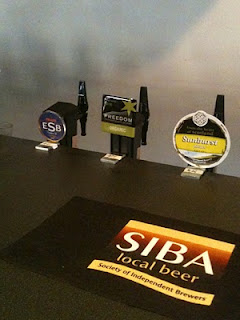
One definition of "craft keg" is keg beer from a microbrewery. In the US, this makes some sense as most of the tasteless beer is produced by big brewers and most of the decent beer by small brewers. But even in the US, there are exceptions: surely, for example, Budweiser American Ale counts as "craft keg" even though it's produced by the world's biggest brewer. On this side of the Atlantic, the picture is completely different. Big brewers not only produce lots of decent cask beer but "craft keg" as well, like the keg version of Fullers ESB in the picture below. Is Draught Guinness, produced by global brewer Diageo, "craft keg"? And if not, why not?
You could also argue that "craft keg" is keg beer that's unpasteurised or unfiltered. But again, most keg beer in the US - including Budweiser lager - is unpasteurised. A more popular definition is to exclude from the "craft" category beer that's been brewed with adjuncts in addition to barley malt, water, hops and yeast. This excludes beers like Budweiser - brewed with rice for a "lighter taste" - but also overlooks the fact that British cask beer since the nineteenth century has included adjuncts such as wheat for head retention, maize flakes for flavour and most importantly brewing sugars to adjust flavour, strength and colour. That's before isinglass is added to make the beer drop bright.
As an exact term "craft keg" seems pretty meaningless to me. Unlike "real ale" (cask or bottle conditioned beer), it's subjective ("keg beer I like the taste of") and the line between it and Carling or Tetley's Smoothflow is an arbitrary one.
I think most CAMRA members sort of know what people mean when they talk about "craft keg" - keg beer that's been brewed with more attention than mass produced lager and therefore tastes better . But an actual definition of what qualifies as "craft keg" and what doesn't is more difficult.
One definition of "craft keg" is keg beer from a microbrewery. In the US, this makes some sense as most of the tasteless beer is produced by big brewers and most of the decent beer by small brewers. But even in the US, there are exceptions: surely, for example, Budweiser American Ale counts as "craft keg" even though it's produced by the world's biggest brewer. On this side of the Atlantic, the picture is completely different. Big brewers not only produce lots of decent cask beer but "craft keg" as well, like the keg version of Fullers ESB in the picture below. Is Draught Guinness, produced by global brewer Diageo, "craft keg"? And if not, why not?
You could also argue that "craft keg" is keg beer that's unpasteurised or unfiltered. But again, most keg beer in the US - including Budweiser lager - is unpasteurised. A more popular definition is to exclude from the "craft" category beer that's been brewed with adjuncts in addition to barley malt, water, hops and yeast. This excludes beers like Budweiser - brewed with rice for a "lighter taste" - but also overlooks the fact that British cask beer since the nineteenth century has included adjuncts such as wheat for head retention, maize flakes for flavour and most importantly brewing sugars to adjust flavour, strength and colour. That's before isinglass is added to make the beer drop bright.
As an exact term "craft keg" seems pretty meaningless to me. Unlike "real ale" (cask or bottle conditioned beer), it's subjective ("keg beer I like the taste of") and the line between it and Carling or Tetley's Smoothflow is an arbitrary one.
Labels:
beer
Monday, 26 March 2012
Football from the North
I've just been reading a review of a new book about the 1879 FA Cup Quarter-Final between Darwen and Old Etonians.
The tie went to a second replay but all the matches were played in London as the Old Etonians refused to travel to Lancashire and the FA declined to intervene (no change there). Like other Northern teams, Darwen's players were working men and as amateurs had to find the money to travel to away matches from their meagre wages, unlike the sides made up of ex-public school boys who dominated the FA Cup in the first decade of the competition.
By the 1880's, Northern working-class teams had begun to compensate their players for expenses and lost wages and some also surreptiously employed professionals, many of them from Scotland where the "passing game" had been invented in the early 1870's. This led to the FA threatening to throw the Northern teams out of what was still officially an amateur game (there was also a proposal to ban Scottish players from English football in order to stem the tide of professionalism). Thirty-seven Northern teams responded by meeting in Manchester in 1884 and forming the openly professional British Football Association.
All this is of course an almost exact parallel with what happened in rugby football in the 1890's: the threat by the amateur Rugby Football Union to expel Northern working-class teams for paying players and the meeting in Huddersfield in 1895 that led to the separate game of rugby league. The FA headed off a permanent split in football by legalising professionalism in 1885 and in 1888 the Northern clubs met in Manchester to form the Football League as a league competition alongside the FA Cup. But what if the FA hadn't sanctioned professional football? Would amateur football in the South and professional football in the North have continued to be played under the same rules or would they have grown apart like rugby league and union? Would professional clubs like Arsenal and West Ham still have emerged in London and the South to challenge the amateur FA? Would they have eventually linked up with the professional Football League clubs in Lancashire and the Midlands as they did in the early twentieth century?
I think football would be broadly similar if the split between amateurs and professionals had continued and the Football League would still have expanded from its Lancashire birthplace to the Midlands and then the South in a way that rugby league didn't (apart from to Australia, and you can't get much more Southern than that).
The tie went to a second replay but all the matches were played in London as the Old Etonians refused to travel to Lancashire and the FA declined to intervene (no change there). Like other Northern teams, Darwen's players were working men and as amateurs had to find the money to travel to away matches from their meagre wages, unlike the sides made up of ex-public school boys who dominated the FA Cup in the first decade of the competition.
By the 1880's, Northern working-class teams had begun to compensate their players for expenses and lost wages and some also surreptiously employed professionals, many of them from Scotland where the "passing game" had been invented in the early 1870's. This led to the FA threatening to throw the Northern teams out of what was still officially an amateur game (there was also a proposal to ban Scottish players from English football in order to stem the tide of professionalism). Thirty-seven Northern teams responded by meeting in Manchester in 1884 and forming the openly professional British Football Association.
All this is of course an almost exact parallel with what happened in rugby football in the 1890's: the threat by the amateur Rugby Football Union to expel Northern working-class teams for paying players and the meeting in Huddersfield in 1895 that led to the separate game of rugby league. The FA headed off a permanent split in football by legalising professionalism in 1885 and in 1888 the Northern clubs met in Manchester to form the Football League as a league competition alongside the FA Cup. But what if the FA hadn't sanctioned professional football? Would amateur football in the South and professional football in the North have continued to be played under the same rules or would they have grown apart like rugby league and union? Would professional clubs like Arsenal and West Ham still have emerged in London and the South to challenge the amateur FA? Would they have eventually linked up with the professional Football League clubs in Lancashire and the Midlands as they did in the early twentieth century?
I think football would be broadly similar if the split between amateurs and professionals had continued and the Football League would still have expanded from its Lancashire birthplace to the Midlands and then the South in a way that rugby league didn't (apart from to Australia, and you can't get much more Southern than that).
Friday, 23 March 2012
Taxing granny?
It's no surprise that the Labour Party has jumped on the Chancellor's decision in this week's Budget to phase out higher personal allowances (the point at which you start paying income tax) for pensioners, dubbing it a "granny tax".
I'm not quite sure of the rationale behind higher personal allowances for pensioners. There are obviously rich as well as poor pensioners just as there are highly paid as well as low paid workers. While poorer workers and poorer pensioners don't pay income tax, they do pay far more proportionately in taxes and duty on food, petrol, heating and beer (a mixture of mild and old ale is nicknamed "granny" incidentally).
The way to help poor pensioners and workers is to raise personal allowances for everyone, increase the minimum wage, link pensions to wages and phase out indirect taxes in favour of a progressive income tax.
I'm not quite sure of the rationale behind higher personal allowances for pensioners. There are obviously rich as well as poor pensioners just as there are highly paid as well as low paid workers. While poorer workers and poorer pensioners don't pay income tax, they do pay far more proportionately in taxes and duty on food, petrol, heating and beer (a mixture of mild and old ale is nicknamed "granny" incidentally).
The way to help poor pensioners and workers is to raise personal allowances for everyone, increase the minimum wage, link pensions to wages and phase out indirect taxes in favour of a progressive income tax.
Thursday, 22 March 2012
Whitbread and madeleines
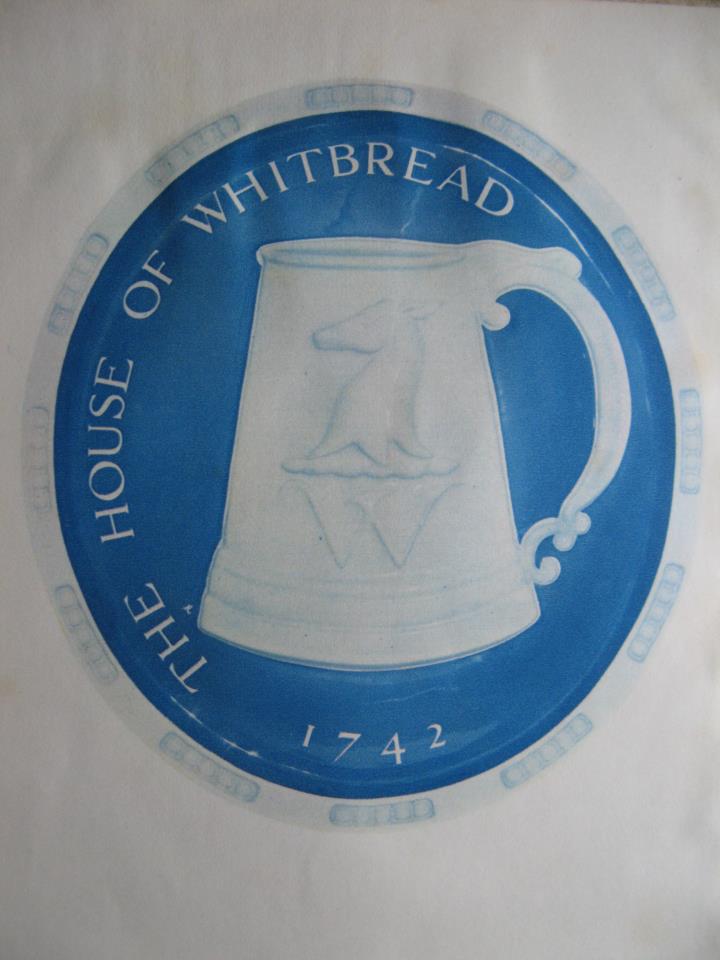
A friend forwarded me a photo yesterday of the original Whitbread Brewery logo from 1742. Like the famous madeleine in Marcel Proust's A la recherche du temps perdu, it triggered lots of memories of twenty and more years ago.
The first pub I drank in regularly in the late 80's was a Whitbread house. Between eighteen and nineteen, I spent pretty much every Friday and Sunday night in there with my mates. Drinking and enjoying - CAMRA forgive me - gallons of their keg Trophy Bitter. I think I probably enjoyed it because of its similarity to the cans of Shandy Bass I'd drunk before that and I even bought cans and bottles of Trophy to drink at home. (The pub also sold bottled Whitbread beers including Gold Label and Mackeson's Stout but I can't remember anyone under fifty ever ordering them). The other place I drank regularly then was the local Labour Club which was owned by Greenall Whitley and sold their keg bitter. The only cask beer I drank was Boddingtons Bitter in a pub we occasionally popped to in free periods in Sixth Form.
I drank in the Whitbread pub up until I went to college in 1990, in Stoke-on-Trent where I drank a lot of Banks's Original, Draught Bass and Marston's Pedigree as well as Worthington's keg bitter in the student union bar. But when I was home from college, I started going to what was known as the "old man's pub", an incredibly smoky Holt's house that served decent pints of their bitter and mild, and which eventually became my regular pub for the next few years.
But for better or worse it was with Whitbread that I started my drinking career and I still have a lingering and no doubt misplaced affection for the Trophy Bitter that I haven't seen let alone drunk for twenty or so years. As you can see, the 1742 stag's head logo is not that different to the one I remember from the late 80's, just before Whitbread were forced by the Monopolies and Mergers Commision to sell off much of their tied estate and a decade or so before they sold their brewing operations to what is now AB-Inbev.

The first pub I drank in regularly in the late 80's was a Whitbread house. Between eighteen and nineteen, I spent pretty much every Friday and Sunday night in there with my mates. Drinking and enjoying - CAMRA forgive me - gallons of their keg Trophy Bitter. I think I probably enjoyed it because of its similarity to the cans of Shandy Bass I'd drunk before that and I even bought cans and bottles of Trophy to drink at home. (The pub also sold bottled Whitbread beers including Gold Label and Mackeson's Stout but I can't remember anyone under fifty ever ordering them). The other place I drank regularly then was the local Labour Club which was owned by Greenall Whitley and sold their keg bitter. The only cask beer I drank was Boddingtons Bitter in a pub we occasionally popped to in free periods in Sixth Form.
I drank in the Whitbread pub up until I went to college in 1990, in Stoke-on-Trent where I drank a lot of Banks's Original, Draught Bass and Marston's Pedigree as well as Worthington's keg bitter in the student union bar. But when I was home from college, I started going to what was known as the "old man's pub", an incredibly smoky Holt's house that served decent pints of their bitter and mild, and which eventually became my regular pub for the next few years.
But for better or worse it was with Whitbread that I started my drinking career and I still have a lingering and no doubt misplaced affection for the Trophy Bitter that I haven't seen let alone drunk for twenty or so years. As you can see, the 1742 stag's head logo is not that different to the one I remember from the late 80's, just before Whitbread were forced by the Monopolies and Mergers Commision to sell off much of their tied estate and a decade or so before they sold their brewing operations to what is now AB-Inbev.

Subscribe to:
Posts (Atom)